
Reverse EMF, Sensory Matrixing, and the Interactive Nature of Haunted Spaces
By: Paul Abner
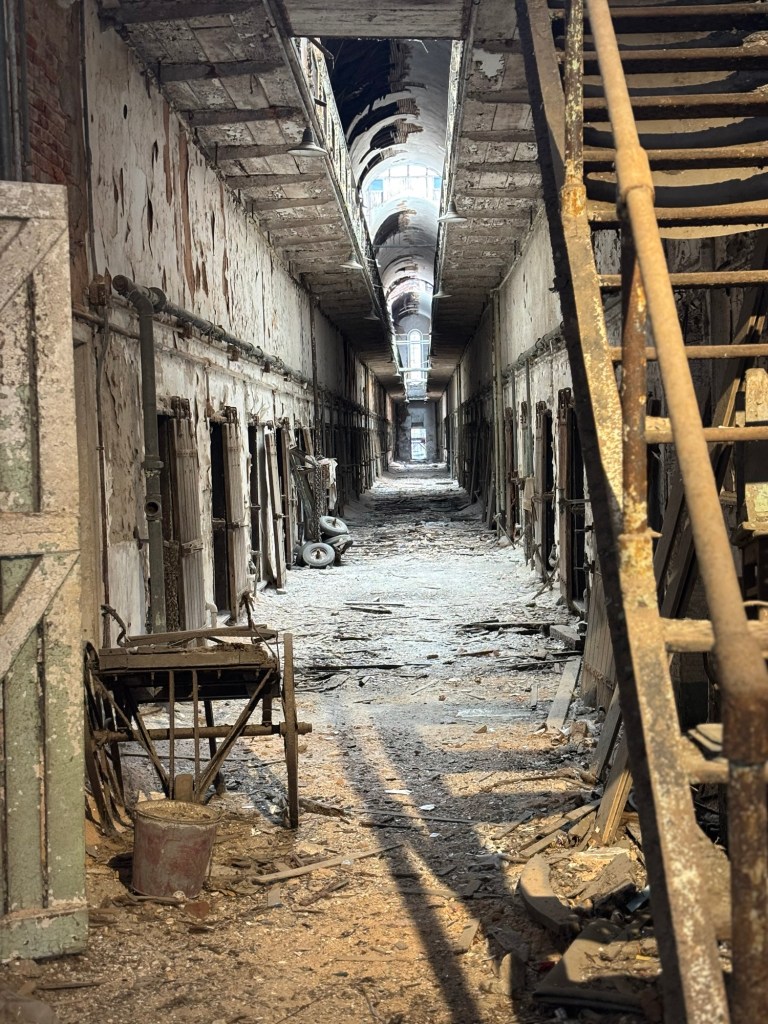
The deeper I travel into the PMA framework, the less interested I become in asking:
“Are ghosts real?”
And the more interested I become in asking:
“How does the environment react to us?”
That difference may sound small at first.
It isn’t.
Because one question searches for mythology.
The other searches for mechanism.
Recently, while researching electromagnetic behavior, I found myself pulled toward a very real scientific principle known as:
reverse EMF
also called:
back EMF.
At first glance, it seems like something that belongs strictly in electronics and engineering. Motors, coils, transformers — things far removed from paranormal investigation.
But the deeper I looked into it, the more important the principle itself became.
Back EMF occurs when a system responds to incoming electrical energy with its own opposing electromagnetic reaction.
In simple terms:
the system pushes back.
That idea hit me harder than expected.
Because suddenly I began wondering:
what if environments behave similarly?
Not consciously.
Not spiritually.
Interactively.
The PMA framework has already explored:
- ionic behavior,
- electromagnetic reinforcement,
- photonic interaction,
- infrasound,
- atmospheric chemistry,
- scent-triggered memory,
- and environmental feedback systems.
But reverse EMF introduced a possibility sitting quietly beneath all of them:
What if environments are not passive spaces at all?
What if they respond to stimulation?
Every human being entering a location immediately alters that environment through:
- body heat,
- electromagnetic activity,
- sound vibration,
- movement,
- scent molecules,
- ionic discharge,
- emotional tension,
- and focused attention.
We tend to imagine haunted places as static locations where phenomena simply wait to happen.
But what if the environment itself is reacting dynamically to the people inside it?
That possibility led me toward what may be one of the most important conceptual breakthroughs in the PMA framework so far:
sensory matrixing.
Humans are already pattern-reconstruction machines.
Our brains constantly organize incomplete information into recognizable meaning:
- faces in static,
- figures in shadows,
- shapes in clouds,
- voices in noise,
- structure in randomness.
Science calls this:
pareidolia.
But I think people misunderstand what pareidolia actually means.
Most assume it means:
“nothing is there.”
That is not entirely accurate.
What it really means is:
the brain is attempting to organize fragmented information into coherent perception.
That is a massive distinction.
Because under the PMA framework, the environment itself may provide:
- fragmented signals,
- partial structures,
- electromagnetic irregularities,
- acoustic fragments,
- photonic distortions,
- chemical triggers,
- and atmospheric instability.
And the body may attempt to assemble those fragments into recognizable sensory experiences.
Not hallucination exactly.
Environmental interpretation.
That possibility changes the entire paranormal conversation.
Traditional paranormal investigation asks:
“Did we really see a ghost?”
The PMA framework may instead ask:
“What environmental conditions caused the nervous system to construct that experience?”
That is a far deeper question.
Because suddenly the phenomenon may not exist entirely:
- outside the observer,
- or inside the observer.
It may emerge through interaction between:
- environmental systems,
- and biological interpretation systems.
That idea became impossible for me to ignore after an experience inside the Deven building at Pennhurst State School and Hospital during Paracon.
While standing quietly in a room, I noticed my body reacting physically to the attention and emotional energy of people around me. The more people focused on me, the more intense the atmosphere in the room became socially and emotionally. Some people reacted with nervous curiosity. Others with discomfort. A few instinctively shifted into empathy and concern.
What fascinated me was not that everyone experienced the same thing.
It was that everyone reacted differently.
That matters enormously.
Because if sensory matrixing is real, then different nervous systems may organize environmental information differently based on:
- emotional history,
- fear response,
- sensory sensitivity,
- trauma,
- pattern recognition bias,
- and environmental awareness.
Two people may stand in the same environment while biologically constructing completely different experiences from the same fragmented signals.
That aligns remarkably well with paranormal reports throughout history.
And it may explain why paranormal experiences often feel profoundly real to the people who experience them.
Not because the brain is malfunctioning.
But because the nervous system is doing exactly what it evolved to do:
construct meaningful models of reality from incomplete information.
Now imagine a location containing:
- low-light conditions,
- EM fluctuation,
- infrasound,
- ionic instability,
- atmospheric tension,
- structural resonance,
- scent-triggered memory,
- heightened emotional expectation,
- and biological stress.
The human body enters that environment and immediately begins processing:
- vibration,
- pressure,
- peripheral movement,
- electrical changes,
- sound localization,
- social tension,
- emotional cues,
- and environmental instability
long before conscious thought catches up.
Under those conditions, sensory matrixing may become intensified.
And if environments themselves respond dynamically to human presence through layered electromagnetic and atmospheric interaction, then the phenomenon becomes even more complex.
Because now the haunting is no longer:
- entirely environmental,
- or entirely psychological.
It becomes interactive.
The environment affects the observer.
The observer affects the environment.
The body interprets the response.
And somewhere inside that loop, the experience emerges.
The deeper I go into this theory, the more I realize the true mystery may not be whether haunted places contain ghosts.
The mystery may be whether human beings have dramatically underestimated the complexity of the conversation constantly taking place between:
- the nervous system,
- the electromagnetic environment,
- and the physical spaces surrounding us.
Perhaps paranormal experiences are not failures of perception at all.
Perhaps they are perception operating at the edge of incomplete information —
where biology, environment, and interpretation begin briefly overlapping in ways we still do not fully understand.


Leave a Reply